
June 24, 2026
The American Art Therapy Association represents a diversity of professionals, students, and organizations across the nation. We recognize and celebrate the work of our members at all levels through our Featured Member series.
For this profile, we spoke with AATA2026 Conference Chair Dr. Liz Hlavek.
What excites you most about serving as Conference Chair?
There is such great energy at AATA conferences. I’m grateful to be in this role to develop a conference that provides meaningful experiences for all in attendance. I hope attendees are able to leave the conference with new professional connections, new skill sets, and feeling rejuvenated in their own work. It is truly an incredible opportunity to hear from experts around the country, and I hope attendees take advantage of the diverse programming this year’s conference will offer.
What does the AATA2026 Conference Theme, ‘Rooted and Rising,’ mean to you?
Art therapy has evolved since AATA’s beginnings, from neuroscience research to community practices, and we strive to build upon our founding principles to meet the needs of today. I know that some art therapy pioneers at times struggled to be taken seriously by their mental health peers. I know that this struggle still exists for some, and i really strive to change that. I always encourage art therapy students to feel a sense of pride and confidence in what they do, and not feel as though they have to hedge their work.
“ I think as our profession rises, we need to shed the fear of being ‘othered’ or disrespected, and focus instead on advocating and educating those who are unfamiliar with our work. Most people’s doubts come from ignorance rather than disrespect. When we hold ourselves to a high standard, others see that. When we doubt ourselves or hedge our skills, others see that too”
— Dr. Liz Hlavek, AATA2026 Conference Chair
Can you tell us about your professional journey and the work that inspires you today?
I work primarily in private practice in Annapolis, MD, and also teach research and thesis as an adjunct instructor. This fall, I’ll begin a new role as Research Coordinator at Notre Dame of Maryland University. I also teach online with the International Institute for Existential and Humanistic Psychology. Recently, I had the opportunity to present at the World Congress for Existential Psychology and meet some of my students in person! I practice from an existential perspective, which was informed by my doctoral research into the art and artists of the Holocaust. I’m eager to delve more into that research.
In 2026, Dr. Liz Hlavek presented the AATA Monthly Learning Series CE Session, The Strength of the Creative Spirit: The Art and Artists of the Holocaust [Click here to learn more].
What keeps you excited about the AATA community?
I was very involved with the MD ATA and worked with colleagues and legislators to develop a clinical art therapy license in the state. I served as the local arrangements chair for AATA 2016 in Baltimore, and joined the board as speaker of the assembly of chapters in 2018. I have really enjoyed connecting with AATA colleagues from around the country and learning about how art therapy is practiced in states other than my own.
“ An organization is only as strong as its membership. If we want the AATA to represent our values, we have to voice them through engagement.”
— Dr. Liz Hlavek, AATA2026 Conference Chair
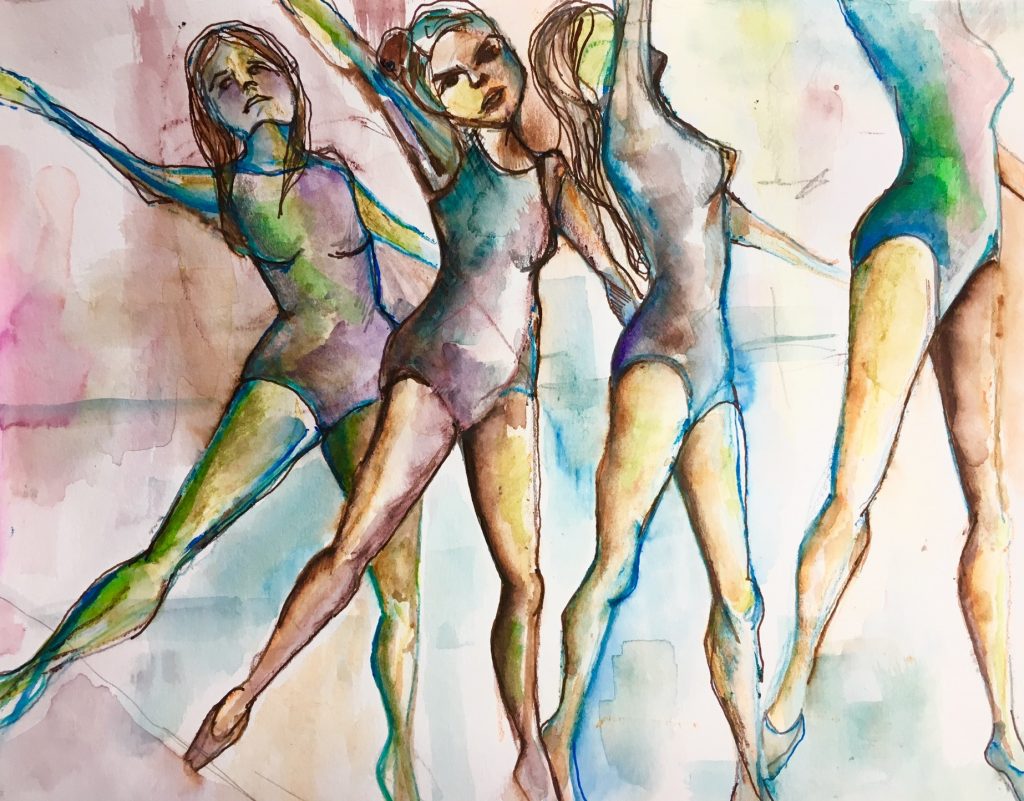
Dancers
By Liz Hlavek, 2016
Mixed media on paper
About Elizabeth Hlavek, DAT, LCPAT, ATR-BC
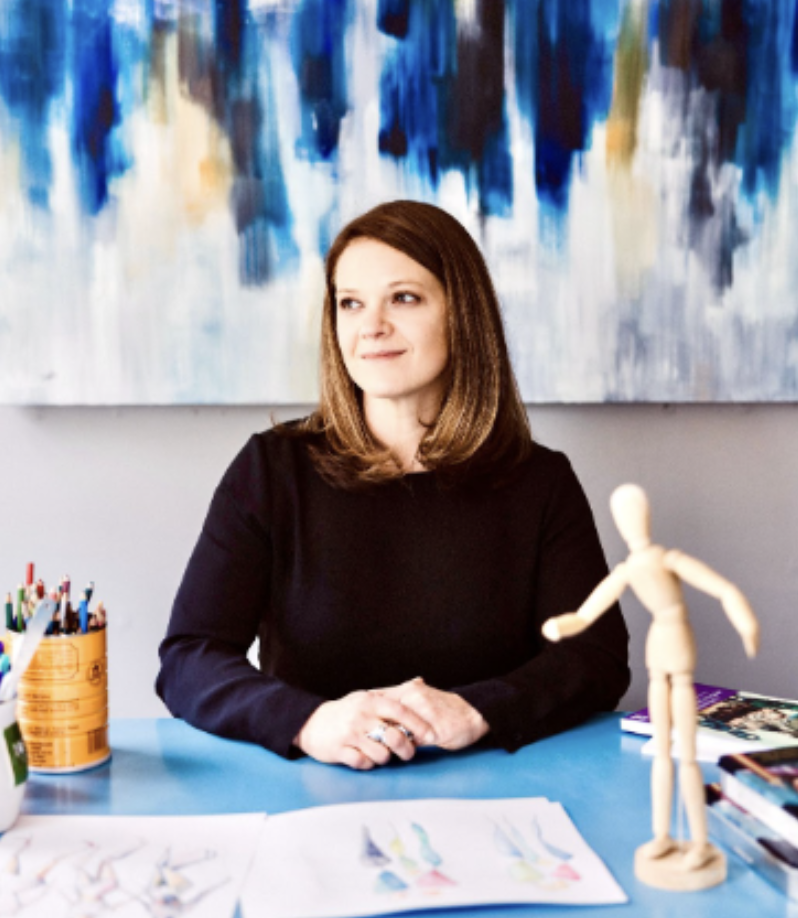
Elizabeth Hlavek, DAT, LCPAT, ATR-BC, is the AATA2026 Conference Chair and an art therapy clinician, scholar, and advocate.
In 2012, Elizabeth spearheaded efforts to develop a clinical art therapy license in Maryland and subsequently sat on the MD Board of Professional Counselors and Therapists, and later the American Art Therapy Association’s Board of Directors. She continues to hold leadership roles within AATA.
Elizabeth’s doctoral research examined artwork made by victims in Nazi captivity, which she grounded to existential theory. Her book, A Meaning-Based Approach to Art Therapy: From the Holocaust to Contemporary Practices, details her phenomenological study in which she interviewed surviving artists about their experiences creating artwork.
She posited that art-making allowed victims to find meaning in their experience, a concept that informs her clinical work. Elizabeth frequently lectures and teaches about her research. She also adjuncts at the International Institute for Existential Humanistic Psychology and St Mary of the Woods College. This fall, she will begin a new role as Research Coordinator at Notre Dame of Maryland University, where she looks forward to supporting student thesis projects while continuing to expand her own research.
CLICK HERE to learn more about AATA2026, Oct. 14 – 17, in Charlotte, North Carolina, and the AATA Virtual Conference, Nov. 14 – 15!