September 2, 2026 | By Dr. Christine Phang
When I first attempted to submit an article for publication in a scholarly journal, the process felt like stumbling around in the dark. I was full of imposter syndrome and often felt like I had no idea what I was doing. With the generous support of mentors, I was eventually able to navigate the various steps of publishing, including responding to peer reviews and making revisions to my manuscript. However, this showed me that the journey of publishing research is challenging and often opaque.
In conversation with colleagues and art therapy students, I found that I was not alone in this opinion. Members of the art therapy community that I spoke with expressed a common sentiment: even when they were interested in publishing their ideas as journal articles, they struggled to know where to start. On top of the demands of daily responsibilities, trying to navigate the world of publication can seem like an intimidating and even impossible task. There was no one guide that clearly outlined how to shape an idea into an article.
I realized that this was a serious gap in our profession. Art therapy research needs diverse voices from the field in order to grow – but how can we expect this need to be met if members of the community are not provided with clear guidance on how to write and submit research for publication? For individuals who already face systemic injustices and inequalities, the barriers to publishing are even higher. For this reason, AATA’s Doctoral Education Committee and Multicultural Committee came together to support me in the creation of Idea to Article: A Practical Guide to Publishing Art Therapy Research.
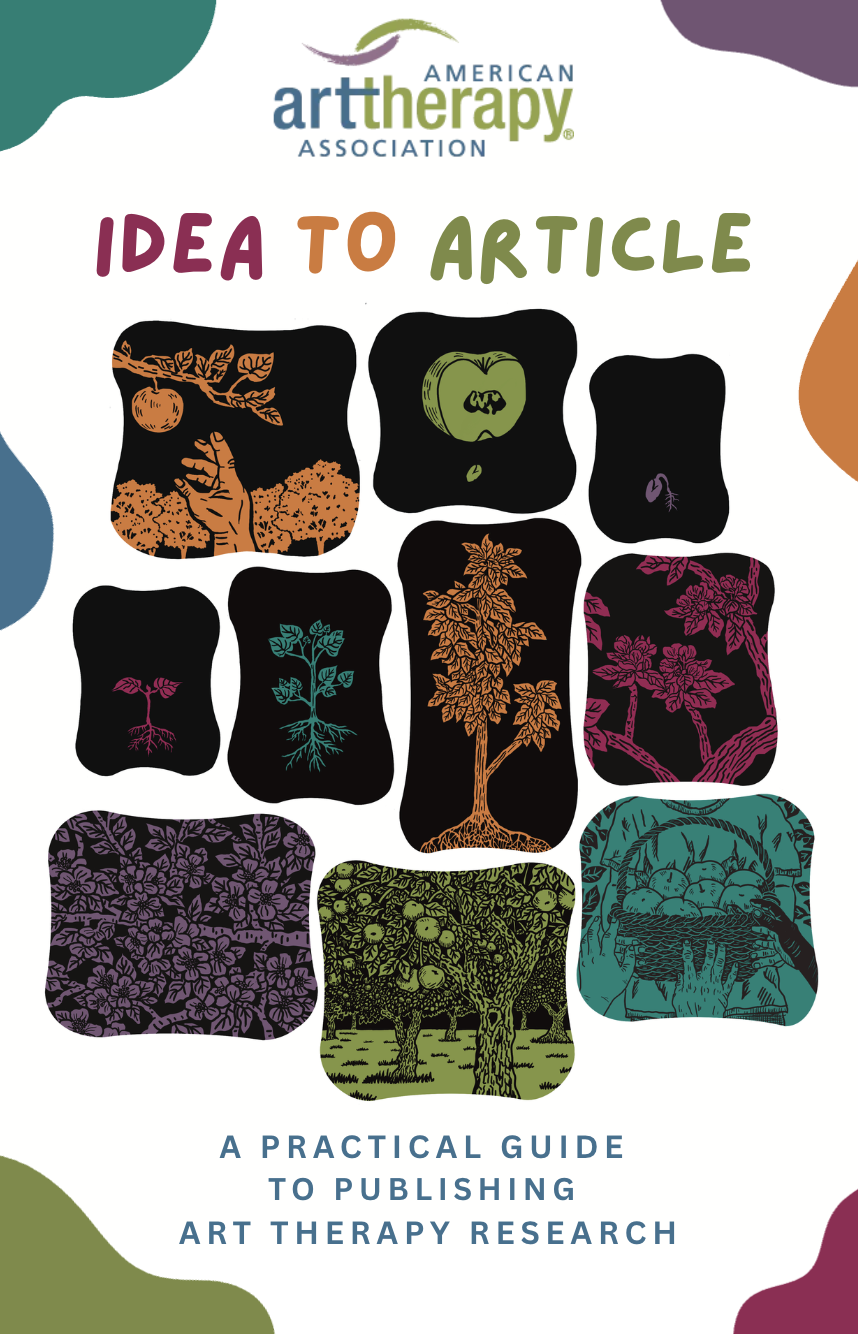
This guide attempts to demystify the process of publishing art therapy research and lower the barriers to entering it. It breaks down the process of publishing into ten stages, beginning with the seed of an idea and growing it till it bears fruit that can be shared with the community. It provides practical guidance that is intended to support anyone in the art therapy community in publishing research. The contents of the guide include steps such as creating an outline for an article, writing a manuscript, submitting to a journal, and responding to peer review. It also provides questions for reflection and art-making, as well as mini-interviews from members of the community who have experience publishing research.
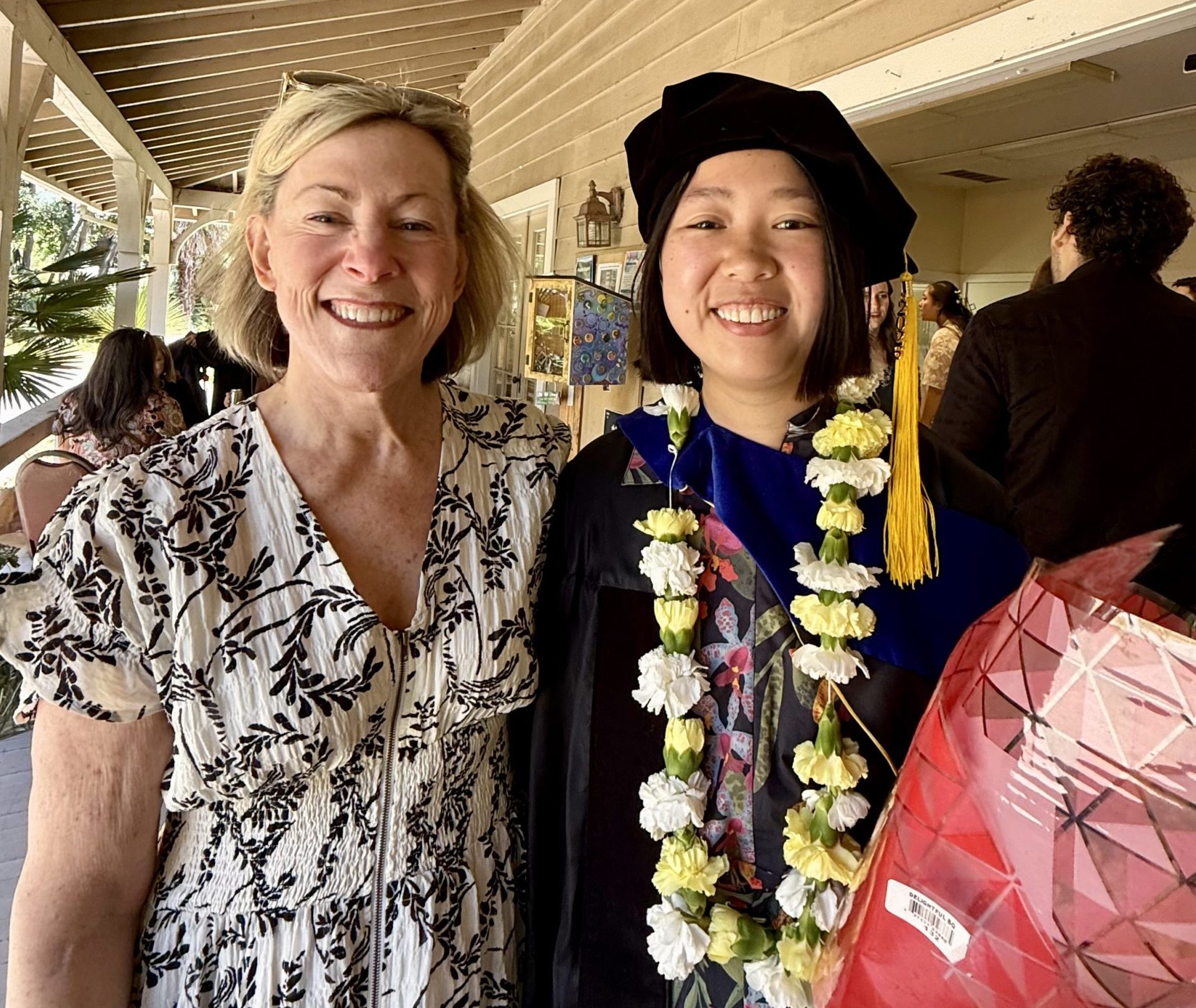
“Dr. Lisa Hinz is one of the people who has generously mentored me throughout my research journey and guided me in navigating the process of publishing art therapy research. This is a photo of us at my graduation from the Dominican University of California’s Art Therapy doctoral program in May 2026.”
– Dr. Christine Phang
As this guide approached completion after months of hard work, I reflected on how I hope it shapes the way readers perceive research. The word “research” has its roots in the French word “recherche”, which means “to go about seeking”. When we think about research, many associations may come to mind. When I first started out trying to publish, I viewed research as an intellectual and highly intimidating endeavor, and questioned if I could contribute anything of value. At times, I am still frustrated with the ways research and the systems around it seem to tend towards exclusivity rather than equity.
However, when I instead think of research as “to go about seeking”, it helps me see research as a journey – a journey of curiosity, of reflecting on our ways of being in this field, and of giving voice to new ways of seeing. This journey’s path is a lifelong road that does not end in publication but continues beyond it, in nurturing our desires to learn and grow, as a profession and as people.
When we view research as “to go about seeking”, it becomes an invitation anyone can enter into. Each member of the art therapy community has unique ideas and perspectives. Research invites us to voice these to our community, for the betterment of the profession. As you read this guide, I hope you are empowered to use your voice to share your thoughts and experiences. Your specific background and lived experiences enable you to contribute to the profession in ways no one else can. As this guide launches, my wish is that it would invite readers to “go about seeking” and to walk the path of curiosity. As a fellow traveller, I hope to one day encounter you and your ideas!