January 8, 2026
The Strength of the Creative Spirit: The Art and Artists of the Holocaust
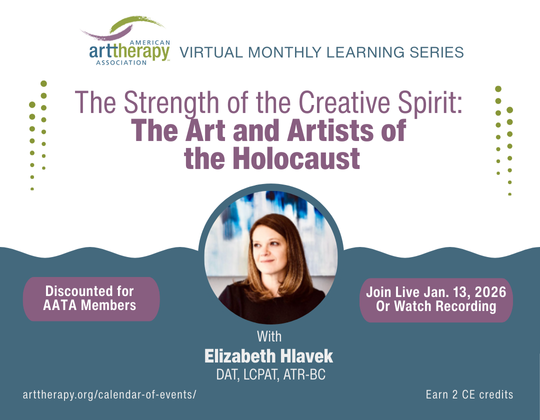
Jan 13, 2026, 7 – 9 pm ET | Virtual CE Event | Everyone is Welcome
Register ($52 for AATA Members, FREE for AATA Student Members, $82 for non-members)
Join us for AATA’s first Monthly Learning Session of 2026, The Strength of the Creative Spirit: The Art and Artists of the Holocaust. This session will examine art created clandestinely under Nazi Captivity, honoring the human capacity for resilience and creativity in the face of suffering.
The session will begin with an exploration of the art of the Holocaust as a phenomenon. Dr. Hlavek will share images of the artwork and discuss how, but more importantly, how this art was made. We will also discuss vignettes from phenomenological interviews with surviving artists and curators of this work. Attendees will be invited to make response art using both traditional and found materials.
We hope you join us for this reflective session “live” or watch the recording at your own pace on AATA’s Online Learning Academy
Participants may receive 2 CE credits for attending. The session registration fee is $82, and is discounted for AATA Members ($52), and FREE for AATA Student Members.
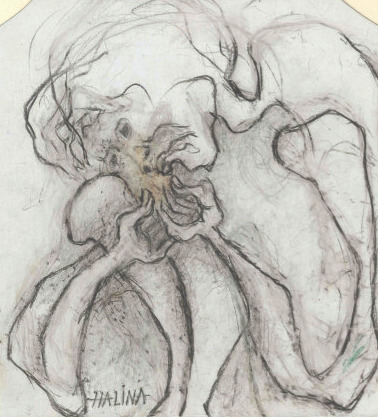
Artwork by Halina Olomuck, who portrayed daily life in the Warsaw Ghetto
Learning Objectives
Participants will be able to:
1) Articulate three motivators for making art in captivity
2) Define the difference between finding meaning and meaning-making
3) Identify two existential needs that were satisfied in clandestine art making
Session Format
- 100 minutes of learning content
- 10-20 minutes for Q&A
About the Presenter, Elizabeth Hlavek
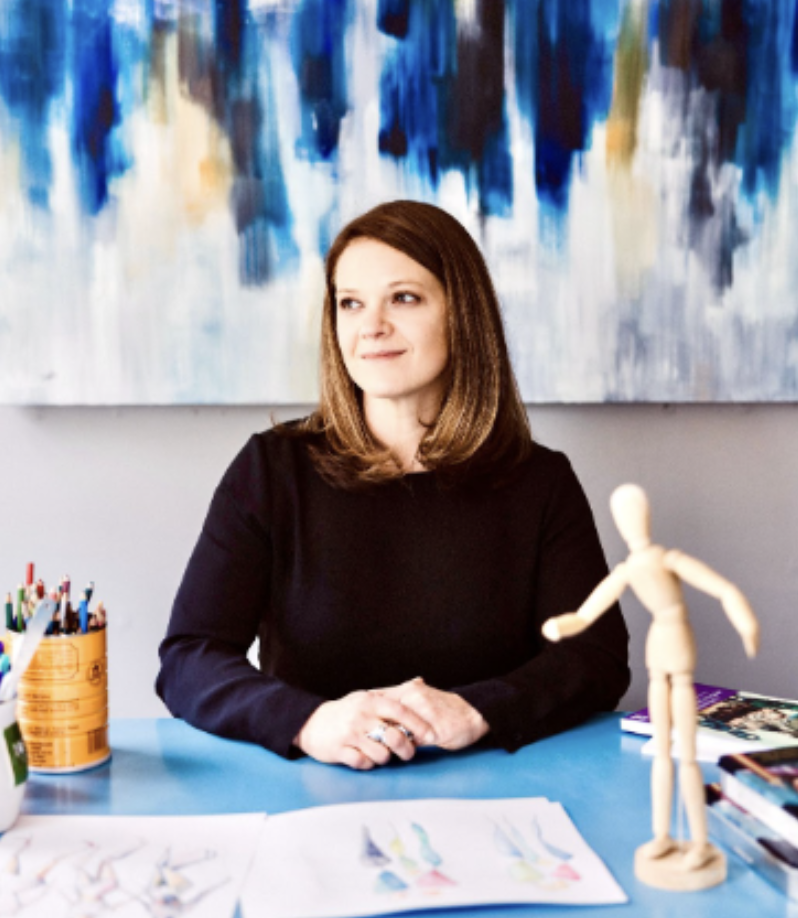
Elizabeth Hlavek, DAT, LCPAT, ATR-BC, is an art therapy clinician, scholar, and advocate.
In 2012, Elizabeth spearheaded efforts to develop a clinical art therapy license in Maryland and subsequently sat on the MD Board of Professional Counselors and Therapists, and later the American Art Therapy Association’s Board of Directors. She continues to hold leadership roles within AATA.
Elizabeth’s doctoral research examined artwork made by victims in Nazi captivity, which she grounded to existential theory. Her book, A Meaning-Based Approach to Art Therapy: From the Holocaust to Contemporary Practices, details her phenomenological study in which she interviewed surviving artists about their experiences creating artwork.
She posited that art-making allowed victims to find meaning in their experience, a concept that informs her clinical work. Elizabeth frequently lectures and teaches about her research. She also adjuncts at the International Institute for Existential Humanistic Psychology and St Mary of the Woods College.