
December 10, 2025
The American Art Therapy Association represents a diversity of professionals, students, and organizations across the nation. We recognize and celebrate the work of our members at all levels through our Featured Member series.
Today, we caught up with Dr. Jenna Michalik Preston. She has been an art therapist for more than 30 years, working largely with members of the military and their families. Dr. Preston is now taking her mental health advocacy back to Washington, DC, where her career first began, by running for Congress.
As an art therapist, what excites (or inspires) you most about your job right now?
For the past 7 years, I have been working full-time in Colorado with military members from all six branches of our military and their family members, using my skills as both an art therapist and clinical psychologist. What excites me about my job right now is the honor of being a part of treatment team that is committed to challenging the stigma attached to engaging in mental health services, being open to different treatment modalities, and understanding that treating the behavioral/mental health of our patients is crucial to treating the whole person.
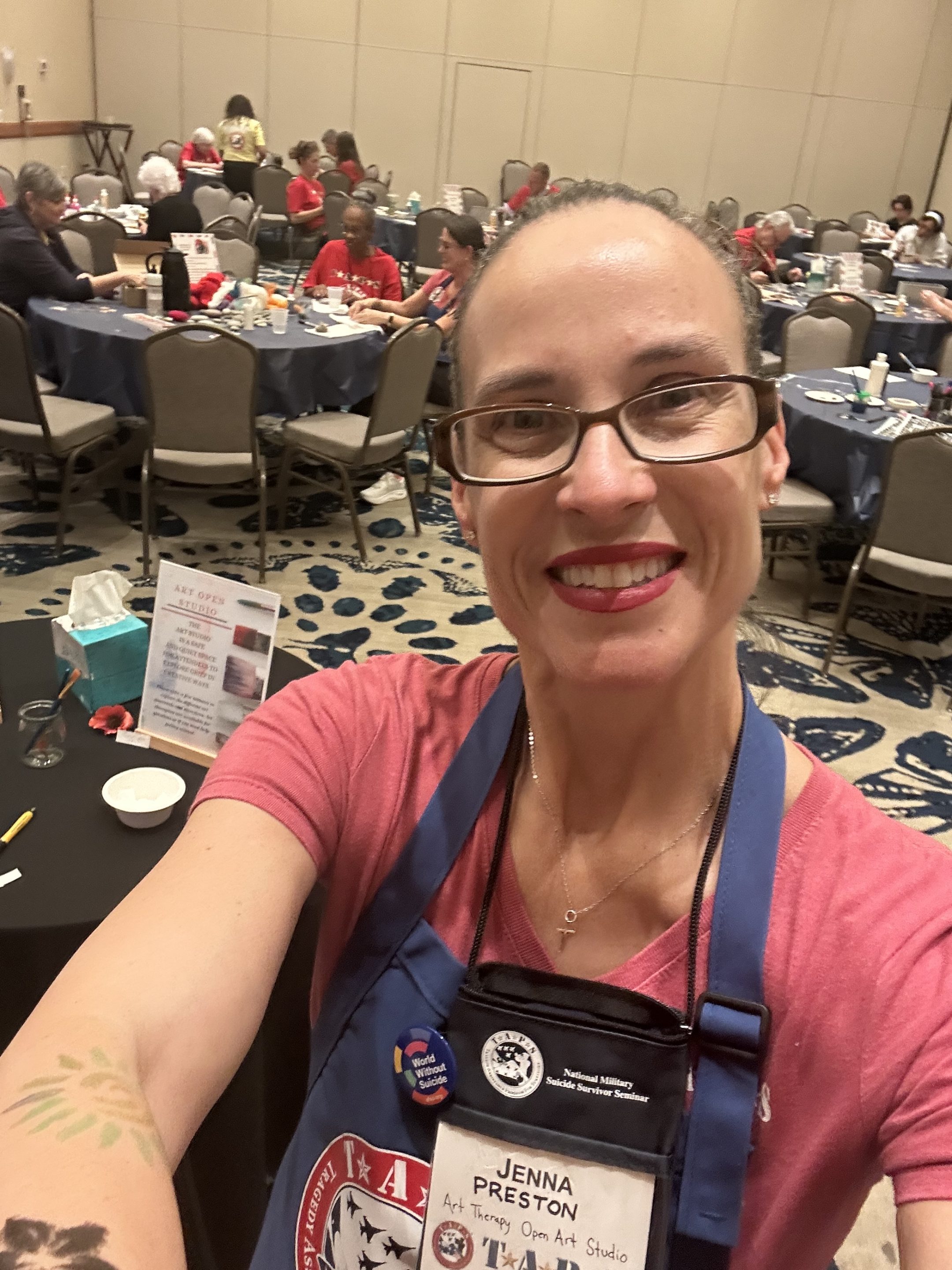
I’m also so inspired by my role as a volunteer art therapist for the Tragedy Assistance Program for Survivors [TAPS] throughout the year.
If you were talking to a potential client about why art therapy is unique (or why it’s effective) what would you say?
This makes me think back to patients I have worked with in hospitals, community mental health clinics, private practice, during workshops, and inside open art therapy studios. As an art therapist, it starts with being attuned to a person’s nonverbal response to first hearing that “art therapy” is a treatment option. Excitement? Anxiety? Avoidance? I try to meet their response with calm assurance that the art process can be a vessel to help them work through their depression, trauma, grief, etc without judgement.
Also, the art process can help create a tangible image that may help them begin to find the words to express what they have been going through, help guide their treatment, and serve as a tool to unlock their defenses so they can begin to connect to what they feel and remember.
Has working with a particular client group shaped your professional focus or specialty?
I am so grateful for the variety of client groups I have been able to work with throughout my career and each opportunity has shaped my skills as a provider. I began my career as an art therapist working inside an inpatient psychiatric hospital providing only art therapy groups to hospitalized adults and adolescents.
During those seven years, I learned the power of group dynamics in treatment and gained experience working with severity of mental health diagnoses (e.g., schizophrenia, bipolar disorder, detox, severe depression, etc), that I don’t often see in outpatient work. I spent a significant portion of my career working with children and adolescent clients in community mental health clinics in OR, WA, and VA. These experiences shaped my specialty in family therapy work, adolescent development, and working with youth in the foster care system. My current work with active duty military and military survivors has strengthened my belief that so much of the work we do is helping people work through trauma.
Tell us about your average day as an art therapist.
I work full-time on a military base, inside the primary care clinic using the integrative behavioral health model. I use my clinical psychology skills to provide brief, solutions-focused treatment for symptoms of anxiety, trauma, stress, ADHD, chronic pain, etc. An average day is very fast-paced, completing 6 -16 patient encounters per day, providing individual appointments, facilitating stress/anxiety and ADHD classes, and collaborating with other treatment team members. I use my art therapy skills every chance I can, especially when treating military children and conducting workshops on trauma and stress.
“I am currently running for Congress to advocate for mental health. Throughout my nearly 30-year career, I witnessed that mental health issues (depression, anxiety, trauma, addiction, etc) do not discriminate based on political affiliation. I believe the country is in need of leaders that possess the unique skills we have as therapists to listen with compassion, treat people without judgement or discrimination, and help to make lives better in all those we serve.”
— Jenna Michalik Preston, Psy.D., LP, ATR-BC
Tell us about your involvement with AATA.
After graduating from George Washington University in 1996 and while still living on Capitol Hill [in Washington, DC], I became the chairperson for AATA’s federal legislative affairs subcommittee followed by the Chairperson for AATA’s Governmental Affairs Committee (GAC).
During that time, I learned the power of collaboration and advocacy, through meeting regularly with AATA’s lobbyist, representing AATA within the National Alliance for Pupil Service Organizations [NAPSO], and facilitating Hill Days to bring art therapists onto Capitol Hill to meet with their representatives. After I left DC in 2003 to move to England and opened a private practice serving military families – but I was also able to continue collaboration, after accepting a position as the co-regional coordinator for the Suffolk, Norfolk and Cambridgeshire region of the British Association of Art Therapists [BAAT]. After I returned to the states, I was invited to serve on the ATCBs Job Analysis Committee for several terms and on the ATCBs Certification Committee where I assisted in the development and administration of our Art Therapy certification exam. The relationships I formed and experiences I gained from all this volunteer work remain a part of my daily work and I am forever grateful for it!
Did your interest in federal policy-making continue?
Yes! I am currently running for political office (U.S. Congress) in Colorado to advocate for mental health. I welcome others to follow and support this journey for all of us www.preston4congress.com. Throughout my nearly 30-year career, I have had the honor of sitting alongside thousands of patients from different races, immigration statuses, genders, sexual orientations, income classes, family systems, political beliefs, religion beliefs, etc. I witnessed that as humans we have more in common than divides us and mental health issues (depression, anxiety, trauma, addiction, etc) do not discriminate based on political affiliation. I believe the country is in need of leaders that possess the unique skills we have as therapists to listen with compassion, treat people without judgement or discrimination, and help to make lives better in all those we serve.
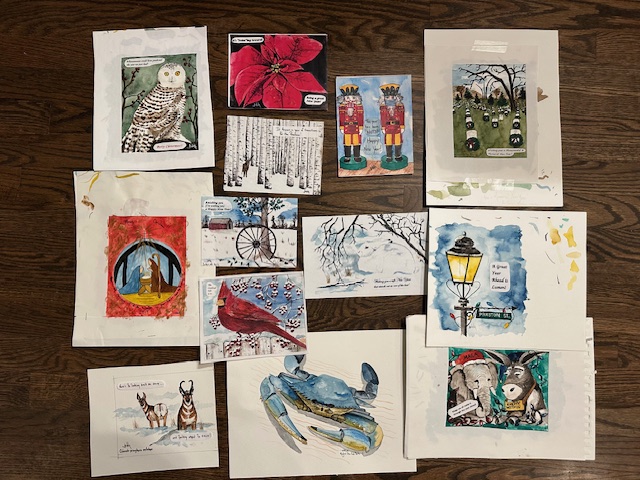
Annual Hand-painted Holiday Cards (30 year tradition)
Each December I take time to reflect on a theme, image from the past year and that becomes our holiday card sent out to friends and family.
About Jenna Michalik Preston
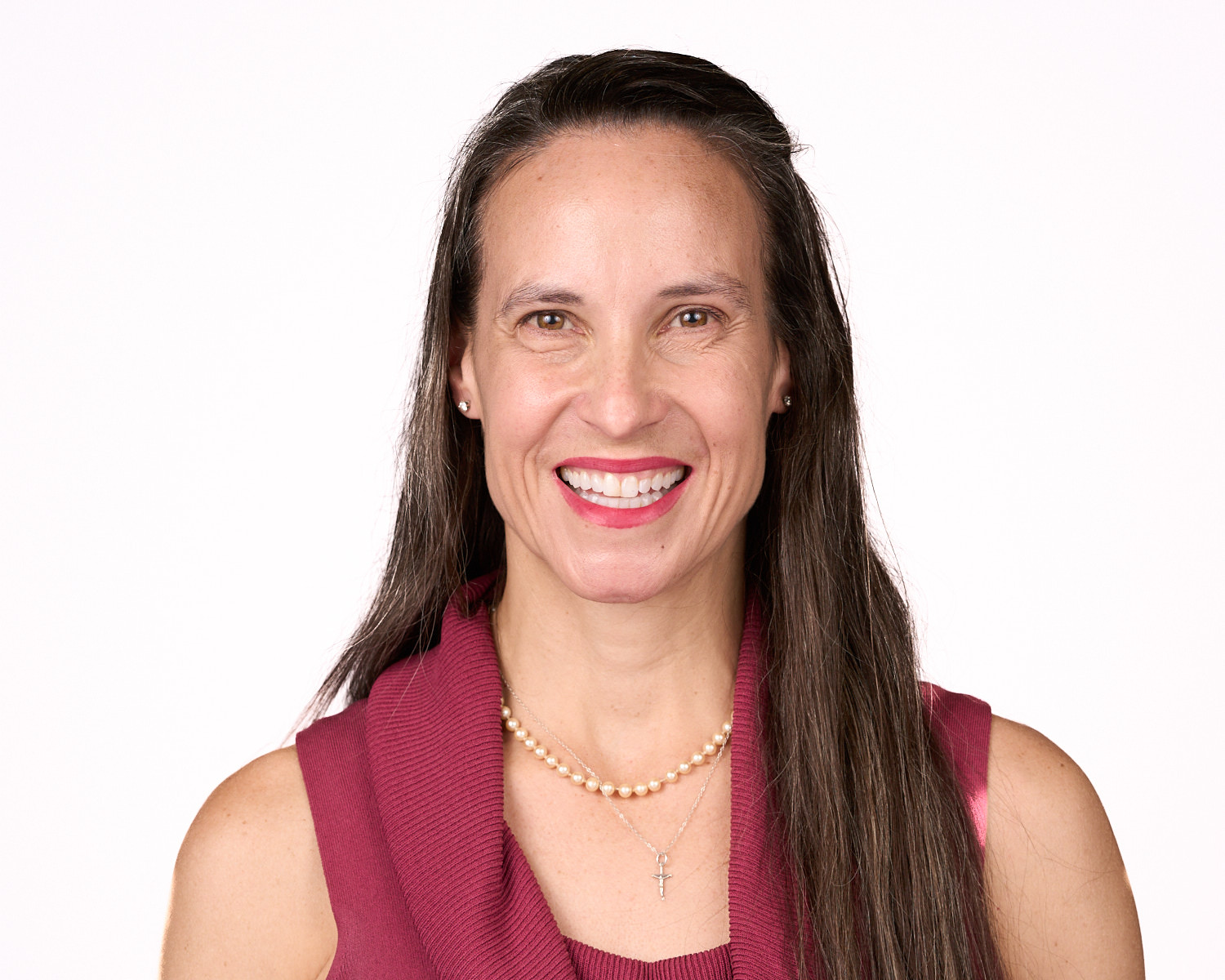
Connect with Jenna on her website or on Instagram @jennapreston4congress or Facebook
Dr. Jenna Preston is a Licensed Clinical Psychologist and a Registered, Board Certified Art Therapist. She earned a Master’s degree in Art Therapy from The George Washington University in 1996 and was an adjunct professor at GWU from 2010-2014. She earned her Doctorate in Clinical Psychology (Psy.D.) from the American School of Professional Psychology. Her career includes serving children, adolescents, police officers and adults within inpatient, outpatient, partial hospitalization, correctional, and residential substance abuse settings. Dr. Preston is a proud military spouse of a retired Air Force officer.
While stationed overseas in England, she opened a private art therapy practice serving military dependents. Dr. Preston is a volunteer art therapist for the Tragedy Assistance Program for Survivors [TAPS] providing an open art studio space for survivors to work through the death of their military hero (e.g., combat-related, suicide, natural causes, etc.). This honor includes serving as a volunteer art therapist during the annual TAPS National Military Survivor’s Seminar and annual suicide survivors’ seminars. Dr. Preston currently works as a Clinical Psychologist at Buckley SFB in Aurora, CO serving active-duty military, spouses, and children.