September 17, 2026 | By Jennifer Schwartz, MAAT, LPAT, ATR-BC, ATCS, Buckeye Art Therapy Association External Relations Chair, Associate Teaching Professor, Ursuline College Campus of Gannon University
Buckeye Art Therapy Association (BATA) Board Members, including President Katherine Jackson, Vice-President Melissa Hladek, and myself, recently traveled with a group of 30 professional and student members and friends to New Zealand to learn about the history, environment, culture, healing, and art therapy practices there.
Our 10-day cultural immersion trip gave us opportunities to learn new methods and understand different approaches to decolonization, mental health, and emotional healing. We got to meet with and learn from several artists and art therapists from across the North Island. An extra special part of the 10-day trip, we visited a rural primary school and several nursing homes, where we made art with the students and residents.
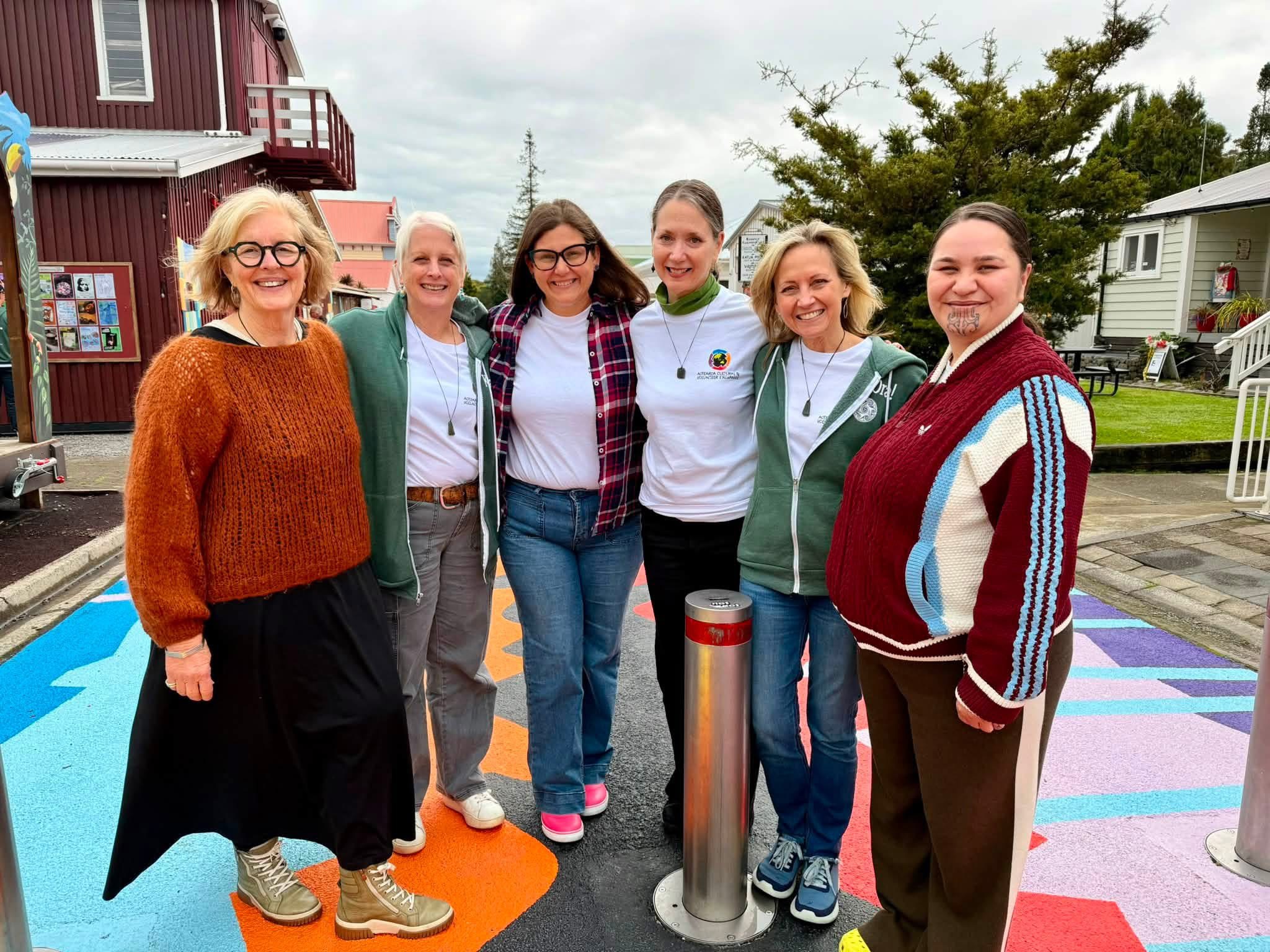
With the fabulous host organizations United Planet and Aotearoa Cultural & Volunteer Exchange guiding us through daily trainings, tours, and cultural experiences, our group learned, bore witness, and relished the beauty of this deeply spiritual whānau, or family.
We were welcomed there as whānau, and learned that in the Māori culture, everyone is whānau, including the lakes, trees, rocks, bugs, and all of life. We also learned that they are fierce warriors who will startle you with their Haka dance; moreover, their ancestors would, as our reading by Christina Thompson (2008) recounted, “kill you and eat you all!” Most resonant, their earth-based somatic healing meti-meti practices, eco-sourced artistic practices, ancient storytelling traditions, and nationalized educational and social welfare infrastructure make it an ideal place for art therapy services to thrive.
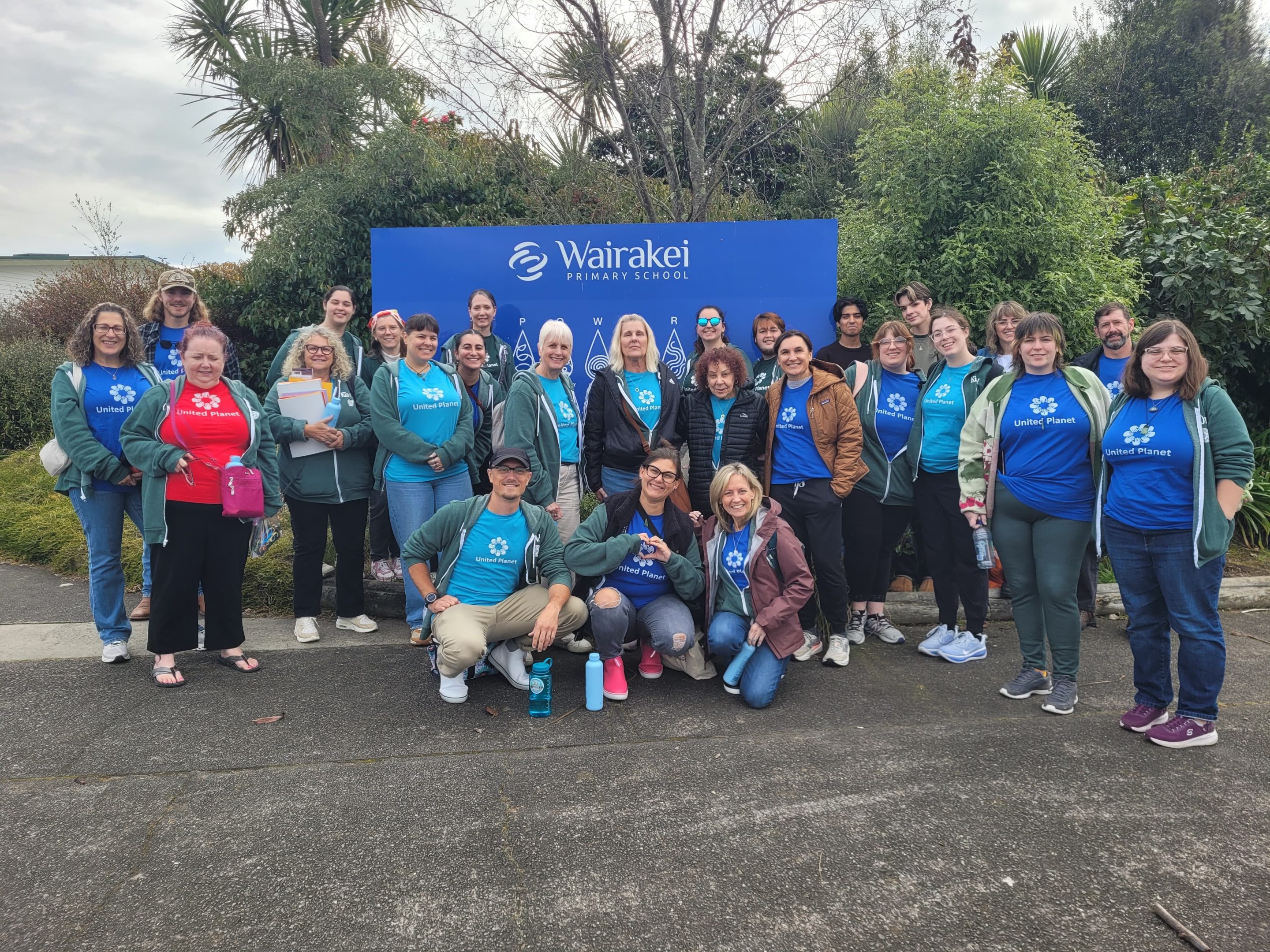
Thanks to the relationships built by our host organizations and the generosity and hospitality of the local people who invited us in, we gratefully spent an afternoon visiting a primary school out in the countryside, where we were welcomed as royalty, with song and dance, and invited into their classrooms to lead a variety of art experiences with the eager students.
We loved seeing so much student artwork in each classroom and collaborating with the talented teachers, students, and staff there.
We stayed 5 days in Rotorua, a wonderland of geothermal activity, healing hot springs, and thriving cultural, historical, and artistic communities. Later in the trip, we explored cities and coastline further north, around Mt. Maunganui and the larger Tauranga. We visited a thriving artists’ community called The Historic Village, where local artist Rhian Smith shared Māori whenua (earth/land) practice, as learned how they make and use paints from local rocks, petrified wood, and other natural materials. Art therapist Jennie Halladay taught us about several regional programs and shared insights from her hospice work.
All charged up from our creative morning, we visited several “aged care homes” to share creative connection experiences with the residents. Through art experiences, we witnessed and facilitated many stories coming forth about the residents’ lives. Connecting with so much wisdom within this community brought deep smiles to our faces.
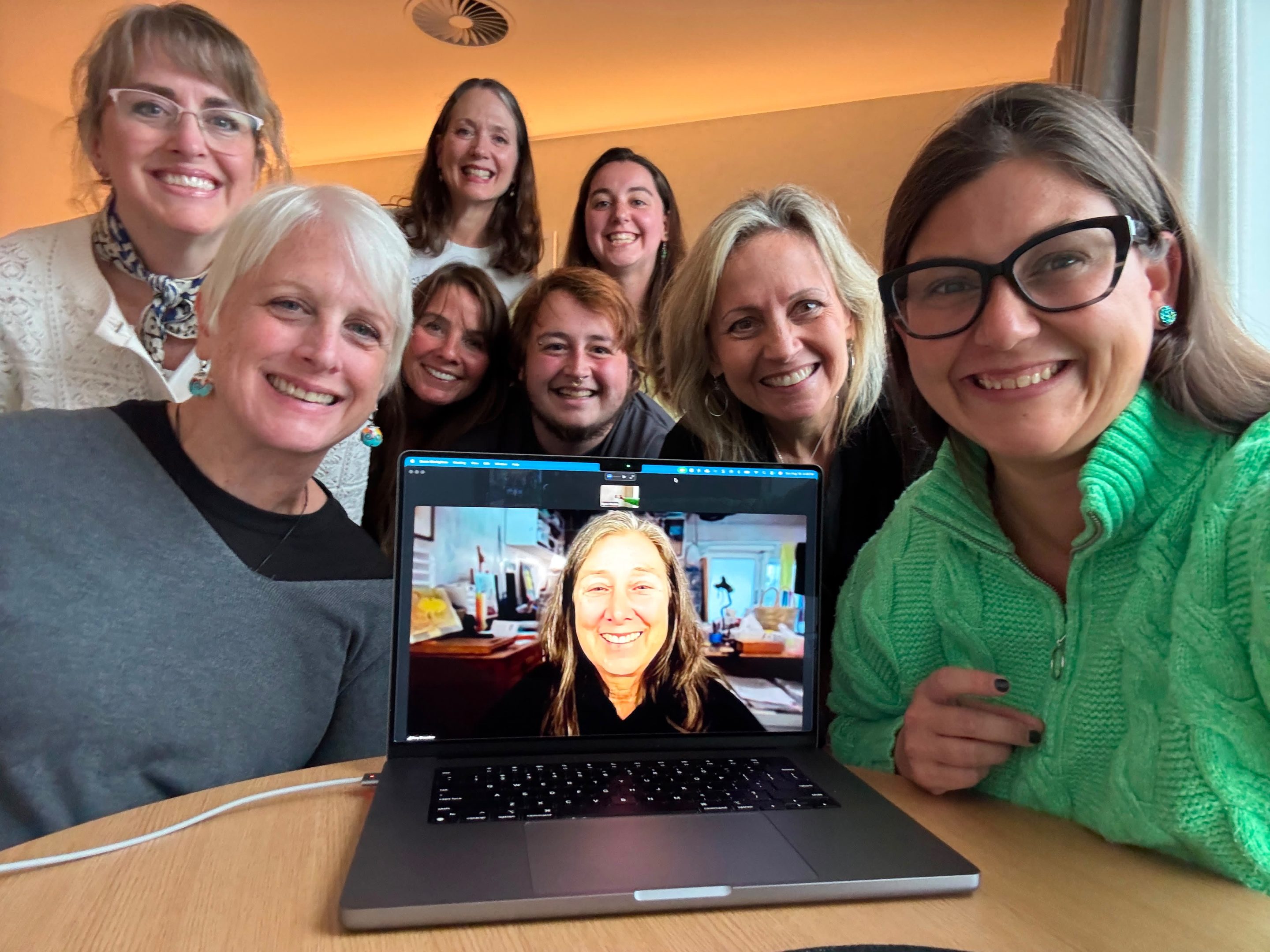
We were also delighted to meet ‘91 Ursuline College alumna and art therapist Mary Brownlow, who joined us for a virtual call to tell us about her art therapy career and current work providing supervision and workshops on Interactive Drawing Therapy. Plans are now in the making to host her back in the States to facilitate our training in this art therapy method that is widely used across Australasia.
As Americans traveling during a contentious time in the world, we recognized our role as ambassadors for peace, respect, and brotherhood. As most in our group were trained and credentialed art therapists, as well as art therapy and counseling graduate students, our sense of professional ethics and multicultural competencies guided our discussions and actions as we embraced new experiences and met fellow humans with humility and gratitude.
Visit to Hobbiton and kirituhi tattoos aside, this trip brought ample opportunity to expand our worldviews, reflect, and be transformed in the land of Aotearoa through our service-learning trip. Despite the unpredictability, unfamiliarity, and potential dangers that international travel can bring, our experienced and brave leader, Dr. Katherine Jackson, kept us focused and grounded in her directive “to join in and lean into our discomfort in order to learn, grow, and evolve ourselves into a more full and robust citizen of the world and cultures” (2026, p. 162).ii
This transformational learning through cultural exchange left us with the tell-tale “invisible strings” that Dr. Jackson describes in her book, connecting our hearts with those of the many people we met on our journey.
Kia Ora, and thank you Aotearoa New Zealand! Your wisdom has left deep impressions on us all!
─────────
Thompson, C. (2008). Come on shore and we will kill and eat you all: A New Zealand story. Bloomsbury.
Jackson, K. (2026). Service learning through cultural exchange and expressive arts therapy. Routledge.