
June 10, 2026
The Irene Rosner David Medical Art Therapy Scholarship is awarded annually through AATA to Student Members pursuing work in medical art therapy.
It is named for Irene Rosner David, one of the true pioneers of the discipline and a retired clinician, educator, and longtime AATA leader who spent more than four decades helping shape medical art therapy before most of the profession recognized it as one.
We recently had the privilege of speaking with her directly about her career, the scholarship, and why investing in the next generation of medical art therapists matters so deeply to her.
“I wanted to convey the ongoing and significant existence of art therapy in the medical milieu, recognize that expansion, and inspire the next generation.”
— Irene Rosner David
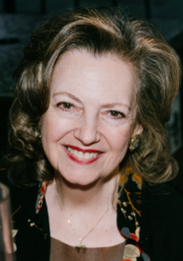
When Irene began her career in 1973, medical art therapy didn’t have a name. There were no textbooks or mentors who had walked that specific path. What existed was an observation: when patients engaged in art in the medical setting, their anxiety visibly decreased, they were attentive and calm, so something seemed to shift in them that the field had no language for yet.
“There was no training and no literature,” she recalled. She had studied with Edith Kramer and Laurie Wilson at NYU, but formal education of the time didn’t offer a framework for what she was witnessing with physically ill, disabled and cognitively impaired patients. “I felt a little uncomfortable because I couldn’t get focused education in this specific way, but applied theory into practice the best I could. I recall Edith saying in a supervision class ‘Irene will teach us’. That was daunting, but I persevered as I was convinced of the value.”
In the late 1970s Irene worked with hospitalized children, but most of her career was seeing adult patients in acute care and rehabilitation medicine, with a wide range of illnesses, and disabling conditions. Gradually more art therapists were working in medicine when attention was toward pediatrics. “Working with children was surely warranted, but adults in hospitals were often overlooked.”
She found one kindred spirit who worked with adults early on in Mickie McGraw, a fellow art therapist specializing in physical rehabilitation, but the community working with adult medical populations remained small. Her first paper, written in 1982 was on art therapy and quadriplegia. Then she wrote about art therapy and AIDS in 1987 at the height of the epidemic, a topic almost no one in the field was addressing at the time.
She felt true progress when former AATA President Bobbi Stoll told her ‘Irene, you’ve gone from being the odd man out to being cutting edge.’ This conveyed the fuller development of medical art therapy for adults and children by the 1990’s.
Her scope has only broadened since. She pointed to the growing focus on the brain, including work with traumatically brain-injured, cognitively impaired patients and veterans, and to neuro-informed art therapy in medicine as some of the most exciting frontiers in the field today.
When Irene retired from clinical art therapy in 2017, she wanted to mark that moment with something lasting. “I wanted to convey the ongoing and significant existence of art therapy in the medical milieu, recognize that expansion, and inspire the next generation,” she said. The Irene Rosner David Medical Art Therapy Scholarship was born from that intention.
She called out that this scholarship is a prompt for students to think seriously about what medical art therapy actually requires. “It isn’t sufficient to say that people can express themselves through art,” she explained. “Students need to understand the clinical goals in relation to patient status, how art therapy integrates into a patient’s overall treatment plan, and how to work collaboratively with a team of healthcare providers as a substantive therapeutic discipline”.
That legitimacy matters deeply to her: she spent years in AATA’s government affairs work advocating for legislative recognition, reimbursement codes, and art therapy’s standing as a sustainable part of healthcare.
Although Irene retired in 2017, she still teaches at the School of Visual Arts, where she leads a graduate course on trauma, drawing directly from her decades with medically traumatized populations. “I feel like I’m passing the torch on to students,” she said.
Her scholarship helps students carry that same torch forward.
Applications for the Irene Rosner David Medical Art Therapy Scholarship are open now. Click here to learn more and apply before the June 12 deadline.