February 1, 2026 | By Jennifer DeLucia, DAT, ATR-BC, LCAT, Chair, Dept. of Creative Arts Therapy, Syracuse University
In 2011, I attended my first American Art Therapy Association (AATA) conference—not as a student, but five years into my career. It was the first time I had an employer who could financially support my participation, opening the door to an experience that would shape the next decade of my career.
That moment marked a turning point in how I viewed myself within the profession and it ignited my interest in contributing to the field in new ways. That inspiration and experience of belonging stayed with me and continued to shape how I support others entering the profession.
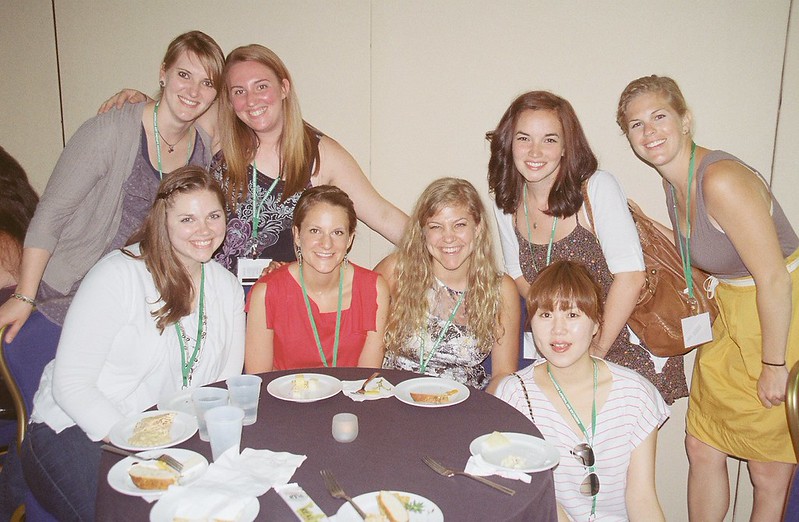
Attendees from the AATA 2011 Conference in Washington, DC
More than a decade later, as faculty leading Syracuse University’s M.S. in Art Therapy program, I watched our students experience that same spark at their first AATA conference in 2023. With partial college funding, three graduate students attended the 2023 conference and six in 2024. Students came back with professional connections that supported them in securing internship placements and post-graduate art therapy supervision. They were excited to see how what they were learning in the classroom was reflected in the contemporary practice and research presentations they attended at conference. And perhaps most importantly, they experienced a sense of connection and belonging within the greater art therapy community.
Advocating to Provide Funding for Students to Attend the Conference
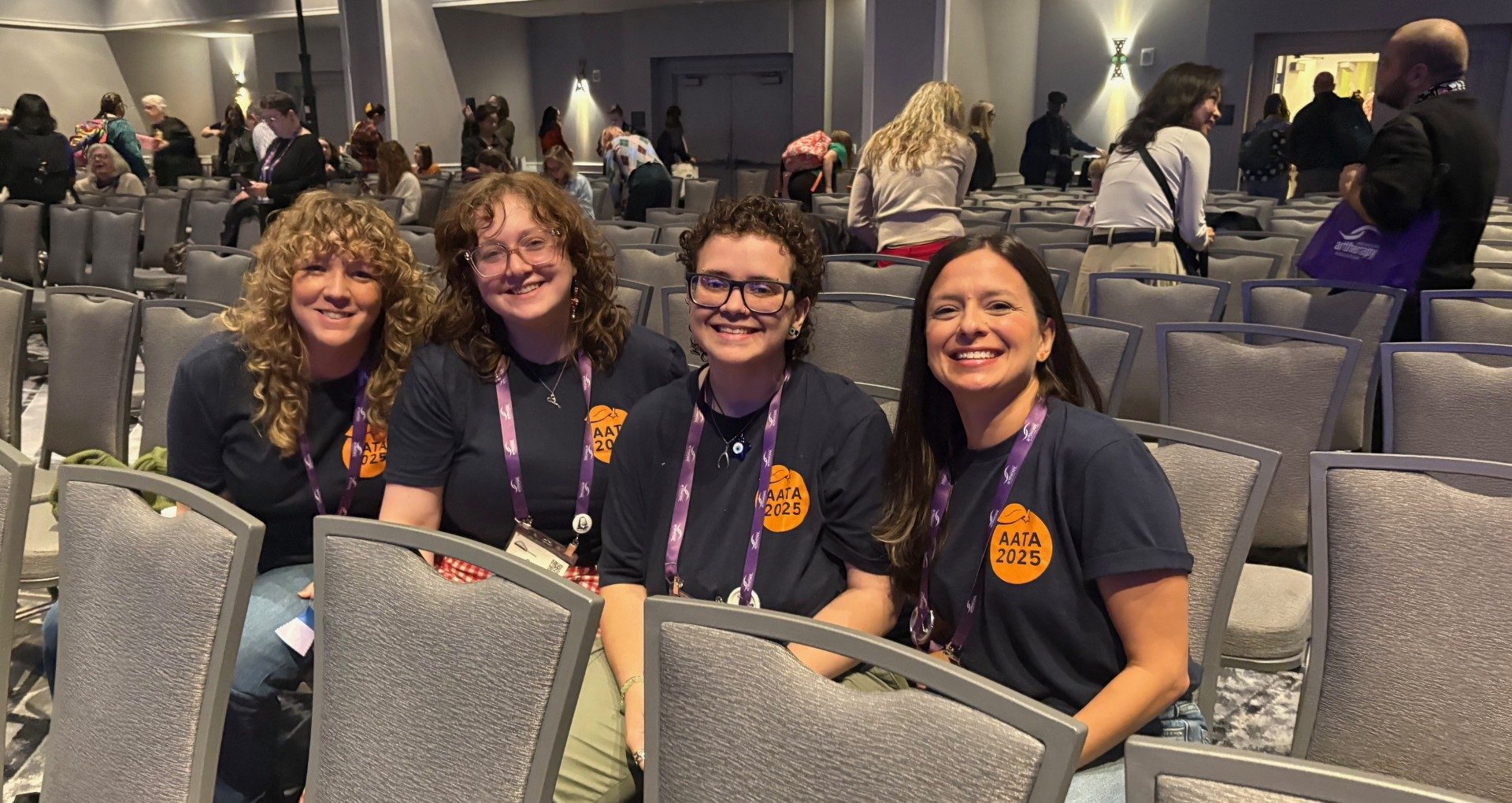
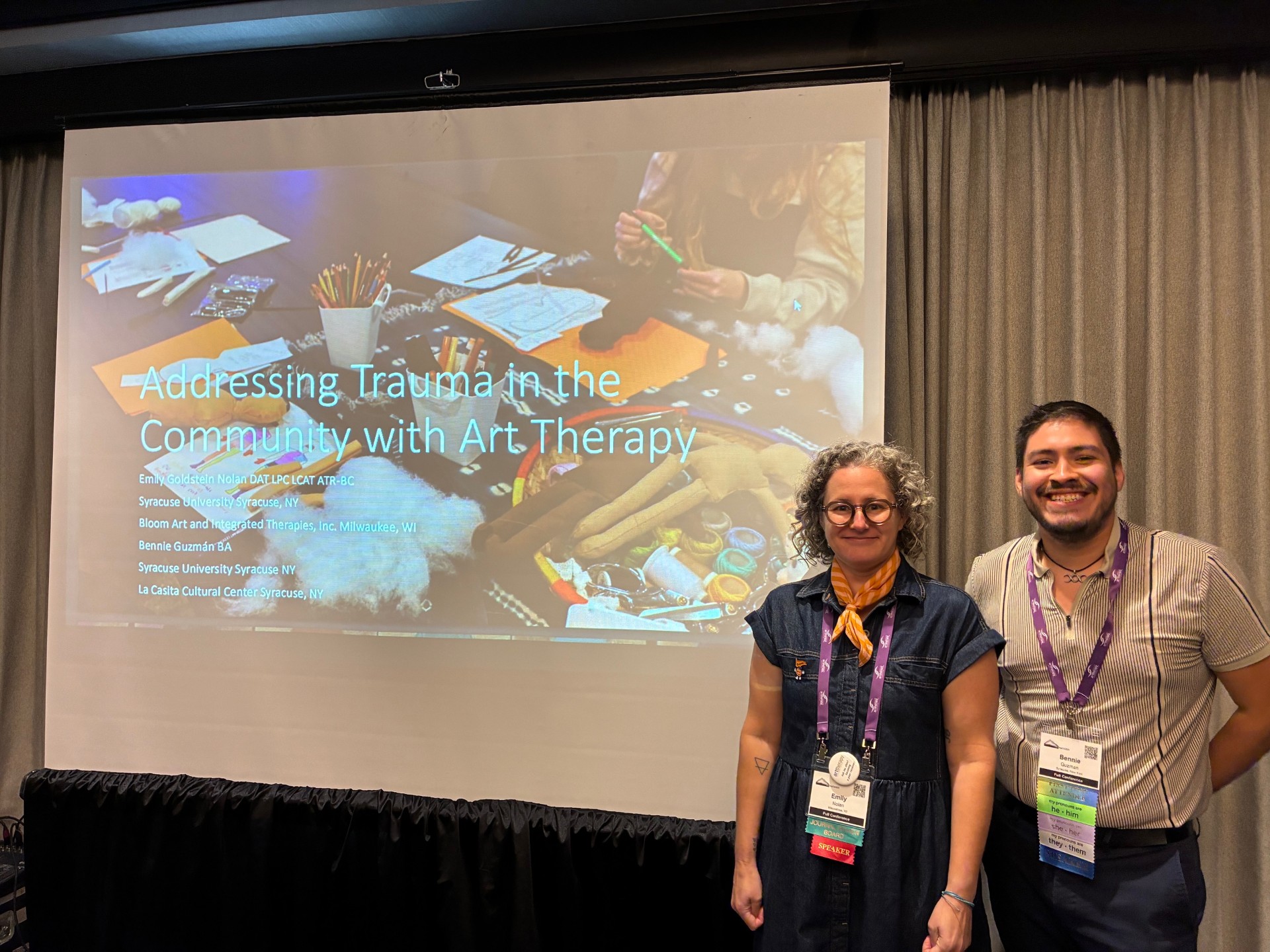
After receiving overwhelming positive feedback during these first two years, I knew that we had to make this experience more accessible to all students. Leveraging student feedback, I successfully advocated for our program to cover all conference related expenses for students once during their time in the program. AATA2025 was our first year with full sponsorship and we had nine students attend conference – five of whom also presented research they were working on with program faculty.
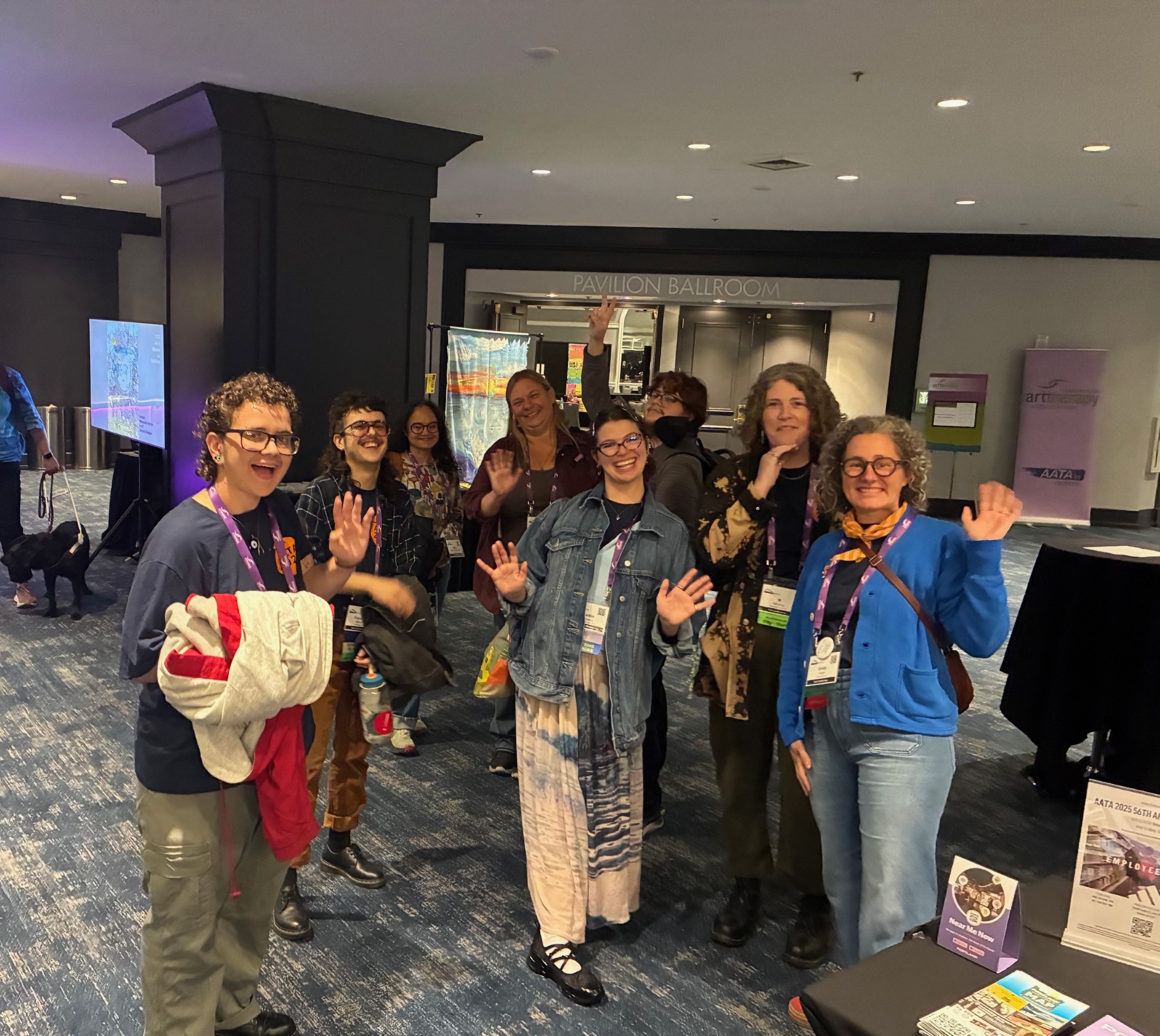
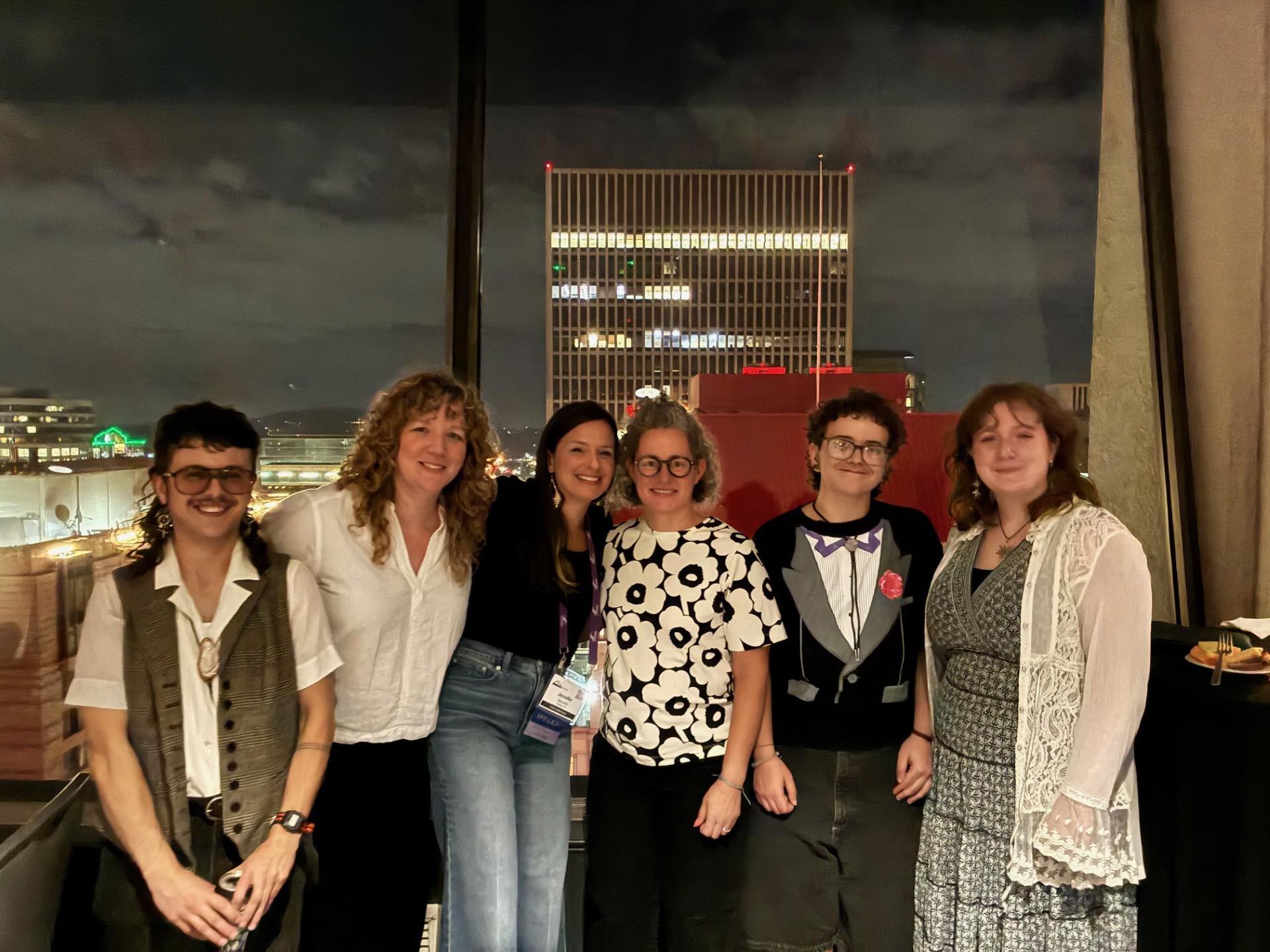
Syracuse University participants at the AATA2025 Conference in Portland, Oregon
Students reported making 3-5 professional connections each. Nearly all (89%) said they had “clear plans” to apply what they learned.
Post-conference surveys confirmed the value of this experience again. All nine students strongly agreed that attending AATA was a valuable investment. All reported making at least three to five professional connections that could support their graduate education or future career. 89% said they had clear plans of how to apply what they learned in coursework, research, or clinical practice. And all students said the conference strengthened their sense of belonging within the Syracuse University art therapy community, and that they felt more connected to the art therapy profession and broader community.
One student wrote, “The AATA conference was really impactful for me as a developing art therapy professional because it helped connect so many parts of my learning…I was able to see people in the field that are doing things similar to what I hope to do and it’s inspiring, honestly.”
Another said, “Being surrounded by professionals in the field and getting the opportunity to hear the research being developed in many topics allowed me to understand the wide number of applications that my degree can have towards my future work. It also gave me an understanding of the community that has developed amongst art therapists and the mutual support that exists both in the US and with those internationally.”
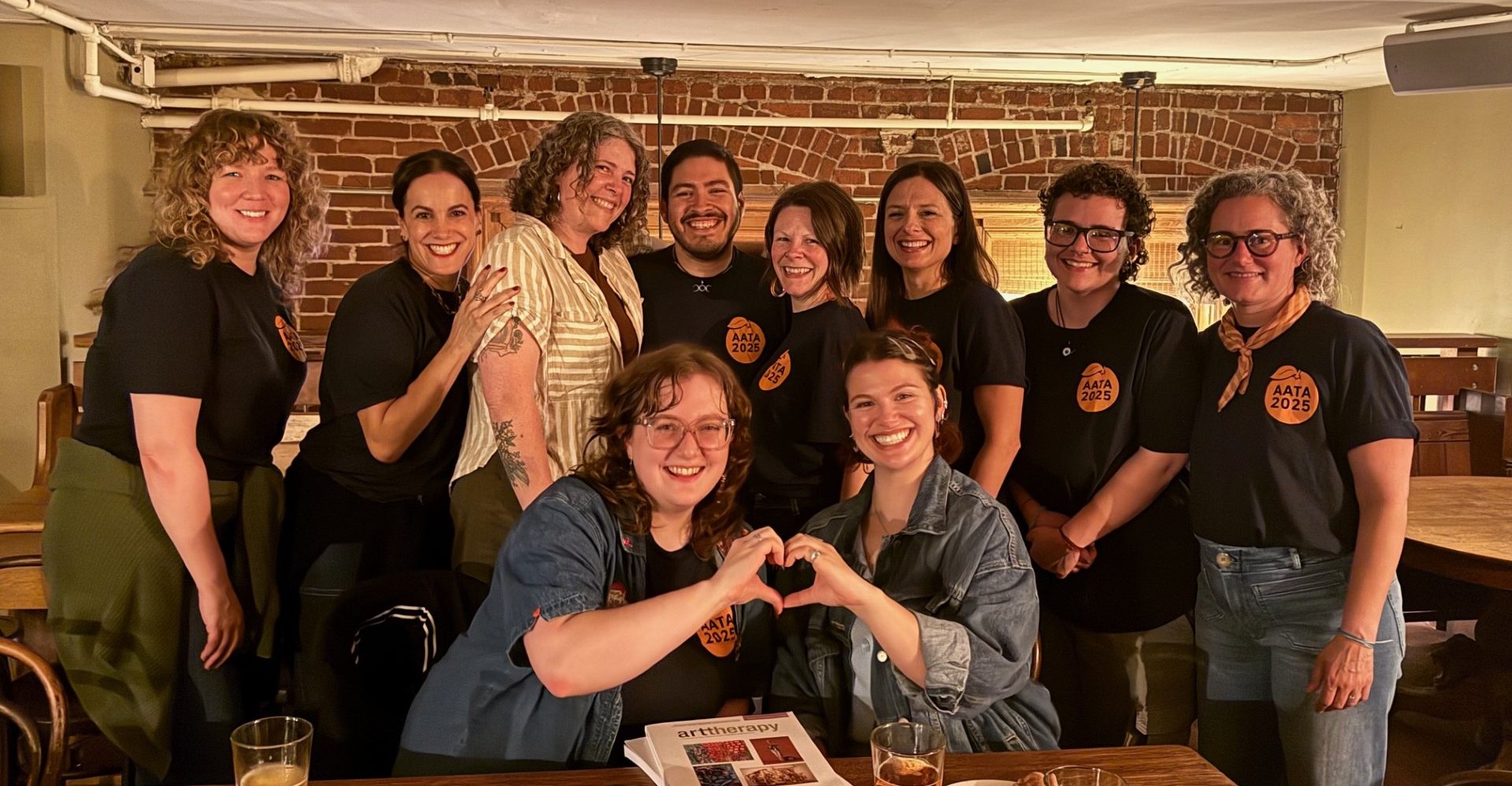
Creating Access for Students is More Than Professional Development. It’s Community Building.
Creating access to professional spaces like AATA is more than professional development – it’s community-building. When institutions invest in access and representation, they foster belonging, mentorship, and professional identity. It was an experience of connection for our students, like it was for me in 2011, that reaffirmed our place in the field of art therapy.

Photograph by Doryn Wallach, MS in Art Therapy, 2026
Artist Statement:
“The photograph I created captures the escalator at the conference, a space I traveled up and down countless times throughout the conference week. This simple act of ascending and descending became a ritual of reflection. Each time I rode down, I found myself anticipating what I was about to enter, wondering what insights or connections the next session might bring. As I ascended back up, the movement gave me space to process what I had just learned, to sit with the conversations I’d heard and the ideas that had challenged or inspired me. The repeating metal steps mirror the layered experiences I encountered across three days. Each step is distinct yet part of a continuous journey upward, much like the eleven sessions I attended, each building on the last and contributing to my evolving understanding of art therapy.“
“The escalator moves forward on its own momentum yet requires someone to step on and trust the movement. This parallels my own experience at the conference, where I had to trust that showing up, even while questioning whether art therapy was the right path, would lead me somewhere meaningful. By the time I rode up that escalator for last time, I knew I had.” – Doryn Wallach